The decision
Compare the whole trip, not one fee
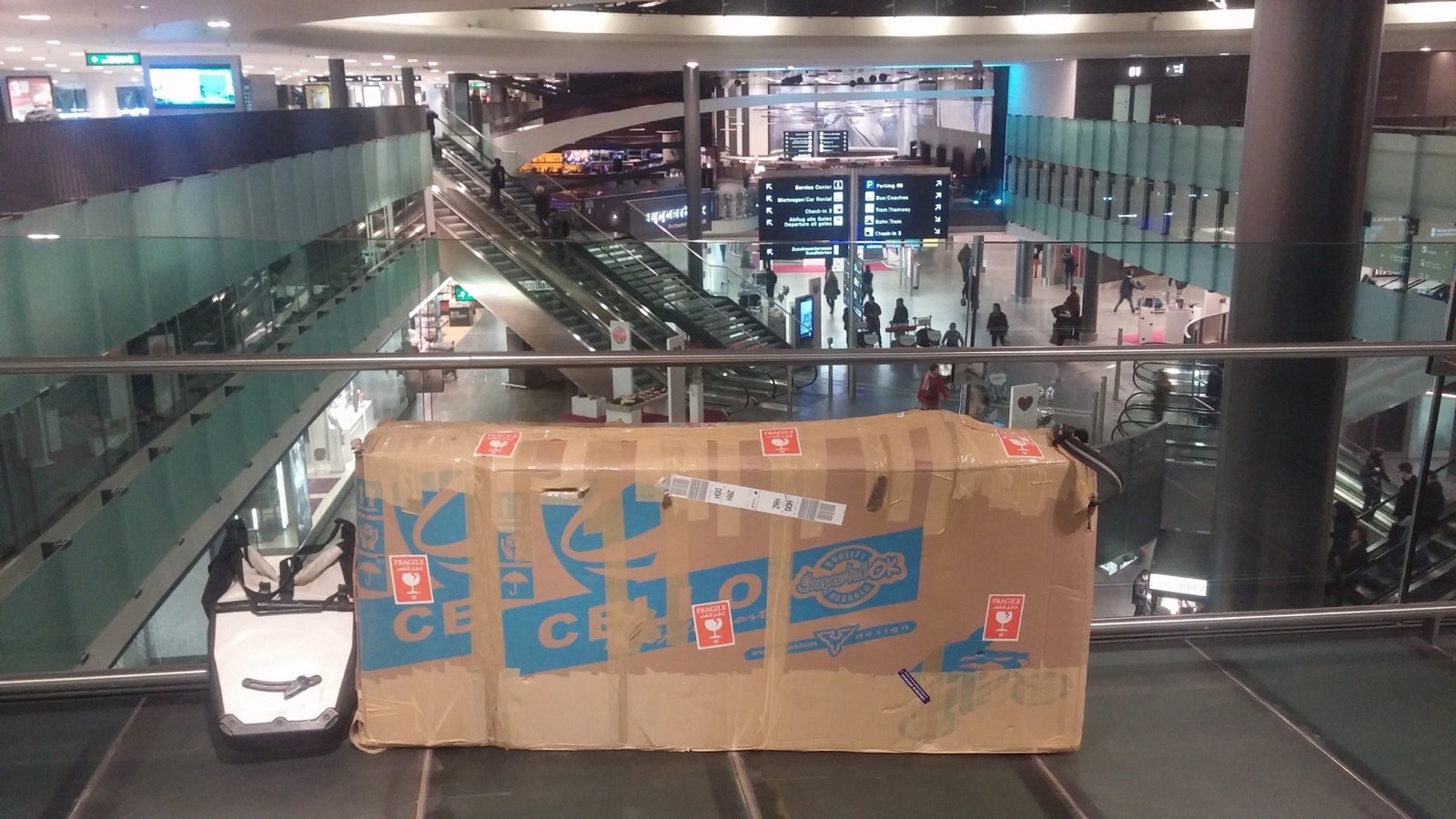
Bring your bike
Familiar fit, handling and setup—balanced against airline, case and transfer friction.
Rent there
Simpler travel—provided size, geometry, gearing, pedals and support are confirmed.
Compare the actual options
A provider for each transport branch.
Quote the whole chain: packing, handoffs, receiving, local vehicle size, assembly and return—not the headline fee.
BikeFlights ↗
Price door-to-door shipping, protection, transit time, insurance and the destination’s willingness to receive and store the bike.
Price a shipmentScicon Aerocomfort 3.0 Road ↗
Compare a reduced-disassembly case only after checking airline dimensions and every ground-transfer vehicle.
Check the flight caseEat Sleep Cycle ↗
Use a premium fleet as a real rental benchmark: exact model, size, gearing, pedals, fit and replacement support.
Check a rental fleetProvider pages checked 16 September 2026. Confirm the exact current service, specification, price and terms before paying.
Detailed planningRead the full guide+
Compare total trip friction, not headline price.
Fly your own bike when exact fit/setup matters and airline→vehicle→hotel case handling is straightforward.
Ship when domestic/eligible service, receiving/storage and transit timing reduce airport friction enough to justify packing and shipment risk.
Rent when trip length is short, local fleet quality is strong, case logistics are awkward or destination-specific equipment is more appropriate.
Total-cost model:
Fly = airline treatment/fee + case + vehicle-size impact + storage + assembly/repack time + damage contingency.
Ship = shipment + packing + receiving/storage + transit buffer + return shipment + damage contingency.
Rent = daily/multi-day rental + pedals/accessories + fit risk + damage waiver/terms + support value.
MTB modifier: category, suspension, tyres, brakes and local replacement support can make rental more valuable than familiarity.
Road/gravel modifier: fit, gearing and known saddle/cockpit may make personal bike more valuable.