Detailed planningRead the full guide+
How to Plan the Day Without Ruining the Ride
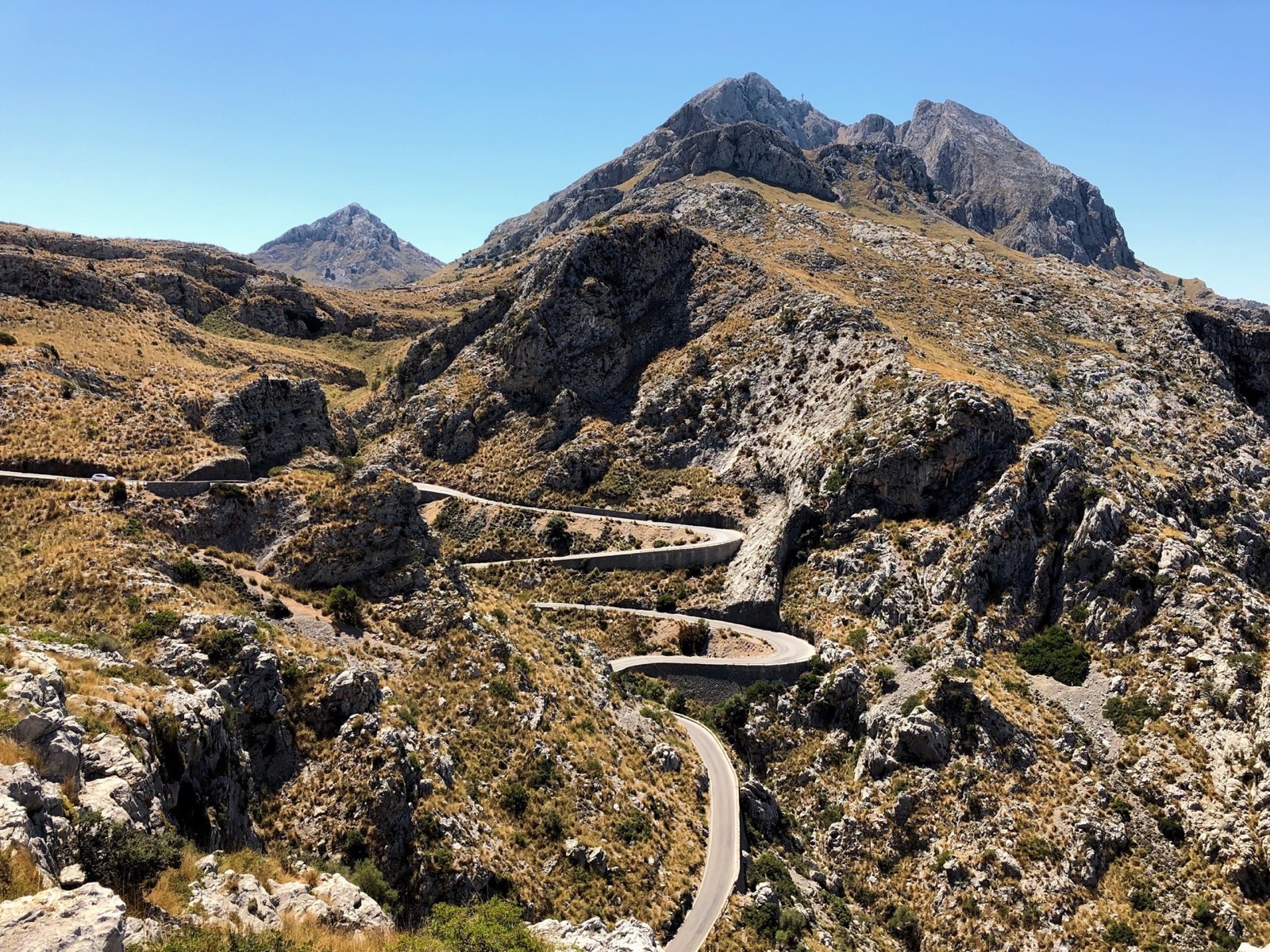
Sa Calobra is one of Mallorca's headline cycling objectives, but the quality of the day depends heavily on logistics. The famous road is not a self-contained climb: for most riders, getting there and getting home are significant parts of the ride.
UNDERSTAND THE SHAPE OF THE DAY
Depending on your base and route, Sa Calobra can sit inside a substantial mountain ride. The descent into the cove precedes the climb back out, so arriving at the top of the descent is not the finish. Preserve enough energy, food, water and daylight for the complete route.
START-TIME STRATEGY
Popularity can mean more cyclists and motor traffic. An earlier start may improve conditions, but the correct timing depends on season, daylight, weather, road access and your route from the hotel. Check current local information rather than relying on a fixed internet timetable.
WEATHER
Conditions in the Tramuntana can differ from the coast. Check wind, precipitation, temperature and visibility for the mountain area. Carry layers appropriate to the descent and forecast.
TRAFFIC AND ROAD ACCESS
Road rules, closures and access arrangements can change. Verify current information before the ride. Ride within local rules and your visibility; do not assume a famous cycling road is closed to normal traffic.
PACING
The best way to spoil Sa Calobra is to treat every preceding climb as the objective. If the climb out is the priority, ride the approach conservatively. Use gearing you can sustain after several hours rather than gearing selected for a fresh effort.
FOOD AND WATER
Map realistic refill opportunities before departure and carry enough to bridge gaps. Do not assume every seasonal café or service point will be open. Heat can materially increase fluid requirements.
THE DESCENT INTO SA CALOBRA
Treat the descent as part of the day's risk management, not a reward for reaching the top. Road users, corners, surface conditions and visibility require margin. The objective is to arrive at the bottom ready to climb, not to maximise descent speed.
THE CLIMB OUT
Settle into a sustainable effort early. If riding as a group, agree regroup points before the climb rather than asking stronger riders to repeatedly stop unpredictably. Preserve enough capacity for the route home.
BASE MATTERS
Pollença/Port de Pollença can make Sa Calobra a natural major objective within a northern mountain trip. From Palma or other bases, the total logistics can be different. Build the route from your actual accommodation rather than copying someone else's distance and elevation totals.
SUPPORT VEHICLE?
A vehicle can change the nature of the day, but road conditions, parking/access and traffic must be considered. If using a commercial transfer or guide, confirm exactly what support is provided and where. Do not assume a sightseeing transfer can carry assembled bicycles.
GO/NO-GO CHECK
Morning of the ride:
Current road/access information checked
Mountain forecast acceptable
Group ability and fatigue appropriate
Bikes functioning normally
Food/water plan realistic
Layers appropriate to descent conditions
Navigation loaded with a fallback route
Enough daylight for the complete ride
THE PRINCIPLE
Sa Calobra is better treated as the centrepiece of a well-managed mountain day than as a segment to collect. Protect the approach, descend with margin, climb at a sustainable effort and leave enough capacity to get home safely.
Check before you ride
Current official sources
Conditions and access can change. Use these live sources when turning the framework into an actual ride plan.