The week at a glance
Seven nights, two feature days, room to adapt
Arrive
Build or collect the bike, inspect it and stop early.
Settle in
Use a controlled introduction to learn the roads and conditions.
Feature one
Take the first mountain objective in the best available window.
Recover
Ride before lunch, rest completely or share a non-riding day.
Go long
Use rolling or mixed terrain to show another side of the island.
Feature two
Choose the objective from the weather and fatigue, not pride.
Stay flexible
Recover a postponed ride or finish with an easier favourite.
Depart
Return or repack the bike with enough margin for the airport.
Detailed planningRead the full guide+
WHO THIS WEEK IS FOR
This framework is for a recreational road cyclist who wants several meaningful rides from one base without trying to collect every famous climb. It assumes the rider is comfortable with sustained climbing but still benefits from recovery and weather flexibility.
It is deliberately not a turn-by-turn route prescription. Exact roads, access, weather, traffic and rider ability must be checked close to the trip. Distances and elevation should be added only after validated route sources are selected.
BEST BASE FOR THIS VERSION
For the cycling-first version, Pollença / Port de Pollença is the strongest default because it supports northern and Tramuntana-oriented riding while retaining restaurants and holiday infrastructure. Alcúdia can be an excellent alternative when resort convenience or mixed rider abilities matter more.
If the holiday is primarily city-led or heavily shared with non-riders, compare the complete base decision before defaulting to the north.
DAY 1 — ARRIVE, BUILD OR COLLECT, THEN STOP EARLY
The objective is not fitness; it is eliminating surprises.
Bring-your-own version: transfer from Palma Airport with confirmed case capacity, document and unpack the bicycle, complete correct reassembly and the Post-Flight Bike Check, then use only a short low-risk shakedown if everything is satisfactory.
Rental version: collect early enough to reproduce the important fit dimensions, verify gearing and controls, and complete a short shakedown.
Evening: settle into the base, organise kit and make the Day 2 decision from the current forecast rather than from a rigid pre-trip plan.
DAY 2 — CONTROLLED INTRODUCTION
Choose a moderate ride that introduces the local roads without spending the week’s biggest effort immediately. The goal is to understand surfaces, traffic patterns, temperature and how the bike and body feel.
Harder version: add climbing while keeping the day comfortably below the trip’s maximum load.
Easier version: stay predominantly on rolling inland terrain and return with plenty in reserve.
DAY 3 — FIRST FEATURE MOUNTAIN DAY
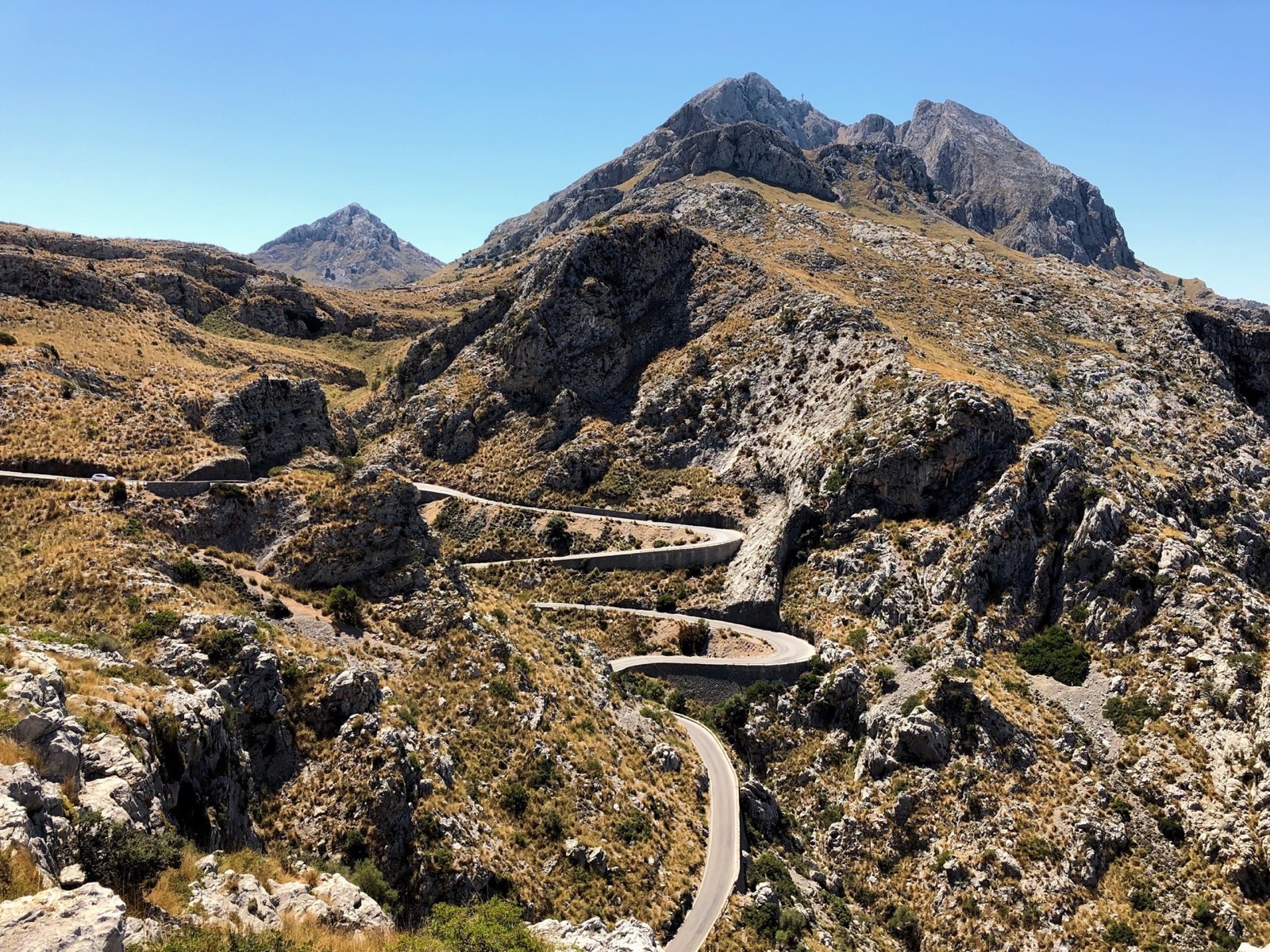
Use the best available conditions for the first major Tramuntana objective. Sa Calobra can be one candidate, but it should be selected only when current access, weather, traffic and rider readiness make sense.
Do not force a headline objective simply because the itinerary says Day 3. Move it later and use another moderate endurance day if conditions are poor.
DAY 4 — RIDE BEFORE LUNCH / RECOVERY DAY
This is what stops the trip becoming a training camp.
Option A: short easy morning spin, back for lunch and the rest of the day off the bike.
Option B: complete rest day.
Option C: non-riding day with partner or family while preserving the legs for the second half of the week.
Do not convert the recovery day into an unplanned hard ride because the weather is attractive unless the rest of the week is deliberately rebalanced.
DAY 5 — LONG ENDURANCE / ISLAND-VARIETY DAY
Use Mallorca’s rolling or mixed terrain to create a longer day that is different from the headline mountain objective. This is where the island’s depth matters: the trip should not be Sa Calobra plus a sequence of similar climbs.
Harder version: longer distance and additional climbing.
Easier version: reduce distance and elevation and preserve energy for Day 6.
DAY 6 — SECOND FEATURE DAY
Choose the second major objective based on the week so far. Cap de Formentor or another significant mountain or coastal ride may fit, subject to current access and conditions.
If fatigue is high, downgrade the objective. A successful week does not require two maximal days.
DAY 7 — FLEX DAY / BEST OF WHAT YOU MISSED
This day exists to absorb weather, fatigue and changing priorities.
If a feature ride was postponed, use the best current window. If the major objectives are complete, ride an enjoyable shorter route, revisit a favourite road or use a Ride Before Lunch format and spend the afternoon off the bike.
Rental riders should confirm the return plan before leaving. Bring-your-own riders should protect enough evening time to organise the case and packing process without rushing.
DAY 8 — DEPARTURE
Rental: return the bike with enough margin before the airport transfer and keep written confirmation of any handover where relevant.
Bring-your-own: repack using the same repeatable Packing System, confirm the airport vehicle for the case and allow for the airline’s current sports or oversized-baggage process.
THE WEEK AT A GLANCE
Day 1 — arrival and setup or shakedown.
Day 2 — moderate introduction.
Day 3 — first feature mountain day.
Day 4 — recovery or Ride Before Lunch.
Day 5 — longer endurance and variety day.
Day 6 — second feature day.
Day 7 — flex day.
Day 8 — departure.
THE WEATHER RULE
The itinerary is a sequence of ride types, not fixed roads assigned permanently to dates. Move the hardest or most exposed objectives into the best available conditions. Use easier inland riding, recovery or non-riding time when mountain conditions are poor.
BRING OR RENT FOR THIS WEEK?
A seven-night single-base trip makes bringing your own bike more compelling because the travel friction is spread across several riding days. Mallorca’s rental ecosystem still makes renting credible, especially when the trip is shared with non-riders or avoiding the case materially improves the holiday.
Use Take Your Own Bike or Rent at the Destination? for the full decision.
WHAT TO BOOK FIRST
1. Choose the base.
2. Decide bring vs rent.
3. Book accommodation only after confirming bicycle and case-storage requirements.
4. If bringing, verify the flight and airport transfer chain.
5. If renting, confirm the actual specification and collection or return plan.
6. Keep the ride plan flexible until current access and weather can be checked.
WHAT THIS ITINERARY DOES NOT CLAIM
It does not claim that Pedal Elsewhere has ridden these routes, stayed at a named property or tested a supplier. It does not guarantee road access or weather. Route-specific distances and elevation, and any commercial recommendations, require separate current validation before use.
Check before you ride
Current official sources
Conditions and access can change. Use these live sources when turning the framework into an actual ride plan.
Use the official forecast and warnings close to each ride; conditions can vary materially by location and elevation.
↗DGT · Current traffic and road incidentsCheck current incidents and restrictions before committing to a feature road or transfer.
↗Balearic Islands tourism · Cycling in MallorcaOfficial destination context for the island’s varied road, mountain and coastal cycling terrain.
↗