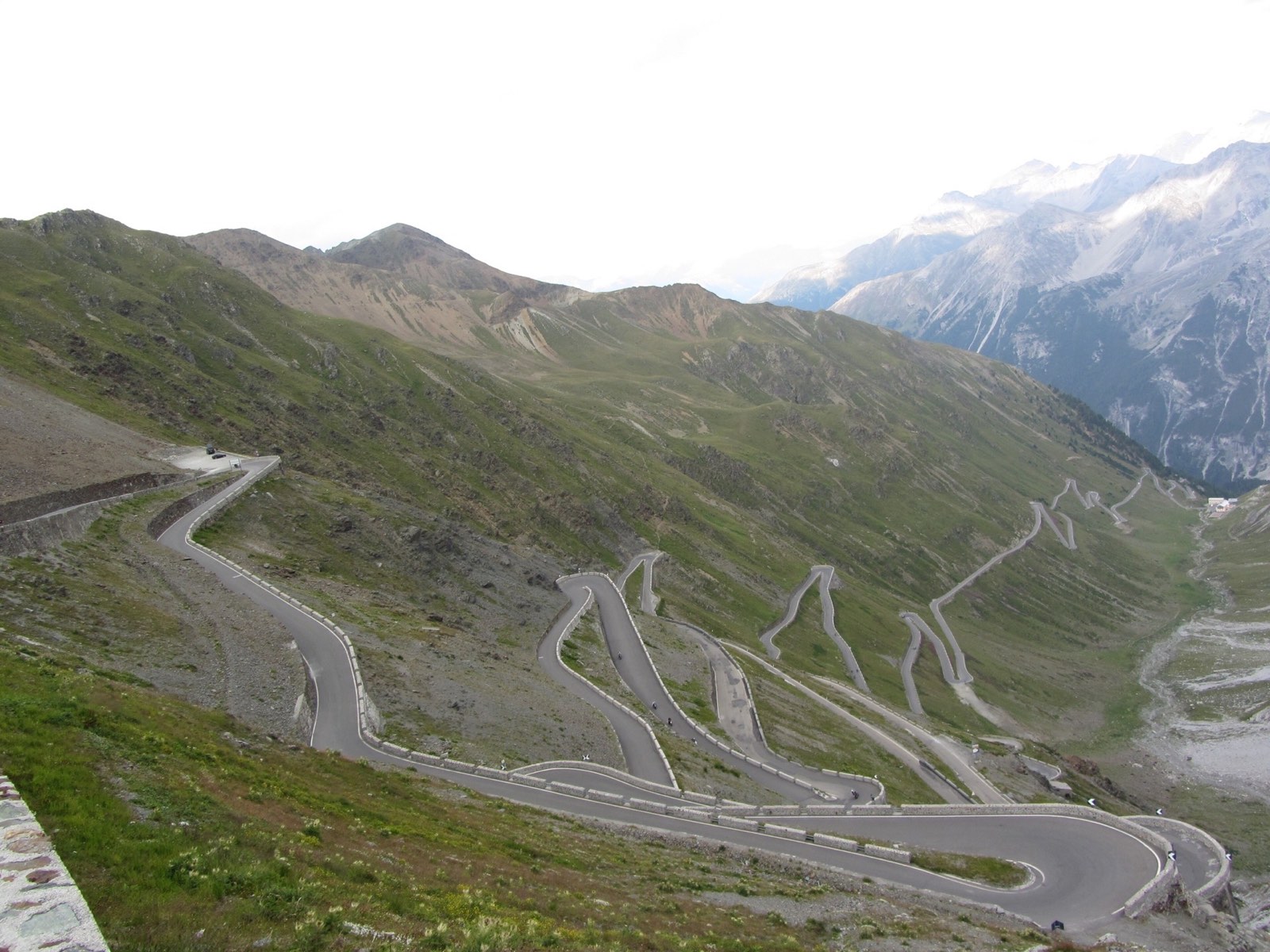
First-trip choice
Focused base or broader pass network?
One-base clarity
A compact, climb-led week built around a single mountain base.
More route variety
A wider pass network that rewards careful selection of one valley and cluster.
Detailed planningRead the full guide+
THE SHORT ANSWER
Choose Bormio when you want a compact, climb-led trip built around a single mountain base and major objectives such as the Stelvio area. Choose the Dolomites when you want a broader network of passes, dramatic scenery and more choice of valleys and bases—but are willing to do more work choosing exactly where to stay.
WHY BORMIO WORKS
Bormio is easy to understand as a cycling proposition: choose the town as the base and build demanding mountain days around it. That reduces one of the biggest planning errors in Alpine cycling—booking a beautiful hotel that is inconvenient for the climbs you actually came to ride.
The concentration of major climbing makes Bormio attractive for riders who want a focused week. The trade-off is equally clear: this is not a flat-riding destination. Recovery, weather and appropriate gearing matter.
WHY THE DOLOMITES WORK
The Dolomites offer a larger menu of celebrated pass roads and multiple viable cycling bases. That variety is a strength, but it creates a planning decision before you even book the hotel. A stay in one valley can feel very different from a stay in another.
For a first trip, resist the temptation to build a tour of the entire region. Choose one coherent pass cluster and a base that lets you ride a meaningful proportion of it from the door.
BASE LOGISTICS
Bormio: simpler conceptual plan; the mountain transfer into the resort is the main logistical hurdle.
Dolomites: more base options; airport and road transfer can vary significantly depending on the valley chosen.
If you are bringing a bike case, model the entire transfer chain. A vehicle that is comfortable for passengers may not have useful capacity once several large bike cases and normal luggage are added.
RIDING STYLE
Bormio suits a rider who wants the climbs to define the trip. The Dolomites can offer more variety within a pass network, but the terrain remains serious mountain cycling. Neither destination should be selected because a route looks short on a map.
Use elevation gain, gradients, altitude, descent length, road conditions and weather—not distance alone—to judge the day.
WEATHER AND FLEXIBILITY
High-mountain conditions can invalidate a carefully planned headline ride. Whichever region you choose, have a lower or less exposed alternative. Check current road status and weather close to the trip and again on major ride mornings.
BRING OR RENT?
Bringing your own bike gives you familiar fit, handling and gearing. Rental can remove a substantial transfer burden. For either destination, do not reserve a generic “performance road bike” without confirming size, gearing, brake setup and pedal compatibility.
If your normal gearing is marginal on long sustained climbs, solve that before the trip rather than discovering it on the first major pass.
WHO SHOULD CHOOSE BORMIO?
• Riders who want a focused climbing trip.
• Travellers who prefer one base rather than moving hotels.
• Riders specifically motivated by the Stelvio-area objectives.
• Groups comfortable with repeated mountain days and deliberate recovery.
WHO SHOULD CHOOSE THE DOLOMITES?
• Riders who want a wider network of pass combinations.
• Travellers who value dramatic scenery and route variety.
• Groups willing to research the right valley/base carefully.
• Riders who may return for different clusters on future trips.
A FIRST-TRIP DECISION RULE
If you are overwhelmed by Alpine geography, Bormio is the cleaner first decision. If choosing routes and pass networks is part of the appeal, the Dolomites offer more ways to design the trip.
Neither is objectively better. The better destination is the one whose geography reduces unnecessary transfers and puts the rides you actually want within a coherent week.
BEFORE BOOKING
• Identify the 2–3 rides that matter most.
• Check whether they form a sensible cluster.
• Choose the base after the ride cluster, not before it.
• Verify typical seasonal access and later recheck live road status.
• Compare bring-versus-rent including mountain transfer logistics.
• Confirm rental gearing if renting.
• Build a weather fallback.
• Leave the arrival day for setup and a shakedown.