Plan this destination
Use the guides in decision order
Start with the trip shape, then solve the bike, stay, arrival and defining ride.
Choose the region and week
Bormio and the Dolomites create different trips; settle that before flights and hotels.
Build a workable base
Accommodation and the mountain transfer have to work with a bike case and tired legs.
Prepare for the mountains
Treat gearing, clothing and pass access as essential trip design—not last-minute details.
Build a bookable trip
Turn Bormio and the Italian Alps into real choices.
Specific bases, accommodation, local support, transfers, equipment and itineraries. Compare the option that fits the trip—not a generic “best”.
Some links in this section may earn Pedal Elsewhere a commission at no extra cost to you. Commercial relationships do not determine the shortlist.
- Best first base
- Bormio town
- Gateway
- Milan airports
- Trip shape
- One base with weather-flex days
- Bike choice
- Climbing gearing is non-negotiable
Location details
Choose the base before the hotel.
Each town creates a different ride map, transfer burden and wider holiday. These are functional choices, not interchangeable hotel locations.
Bormio centre
Walkable restaurants and direct access to the Stelvio, Gavia and Mortirolo network; choose exact hotel location over generic star rating.
Valdidentro / Bagni
A quieter spa-led alternative north of town; allow for the extra connection to restaurants, rentals and ride starts.
Livigno extension
Add it only when more time, altitude riding or a second landscape justifies another hotel move and bike transfer.
Recommended accommodation
Value, premium and splurge stays by function.
These labels compare trip fit rather than fixed room prices. Rates move sharply by date; compare the live total and confirm secure bike storage, case space and workshop access.
Hotel Funivia
The first comparison for a cycling-oriented central stay with the major climbs and town services close at hand.
Official source checked · 20 September 2026
Supported by the source
- Central Bormio location
- Cycling-led positioning
- Guided Alpine riding offer
- Spa and recovery facilities
Confirm before booking
- Secure bike-storage setup
- Workshop and laundry services
- Case storage
- Current room terms
Hotel San Lorenzo
A central hotel alternative for travellers balancing ride access, walkable evenings and broader holiday comfort.
Visit Hotel San Lorenzo ↗QC Grand Hotel Bagni Nuovi
A recovery-first comparison outside the centre, with thermal facilities and a quieter setting near the Stelvio National Park.
Visit QC Bagni Nuovi ↗Short, medium or long
Choose a real route, with a real fallback.
Distances are intentionally approximate where connectors vary. Open the linked route authority, download the current track where provided and recheck conditions locally.
Cancano Lakes
About 20 km at the lakes · climb can add 9 km
Start: Cancano or Bormio
Use the lake circuit for a lower-stress day, or ride the Torri di Fraele climb from the valley to turn it into a proper mountain route.
Open route source ↗Passo dello Stelvio from Bormio
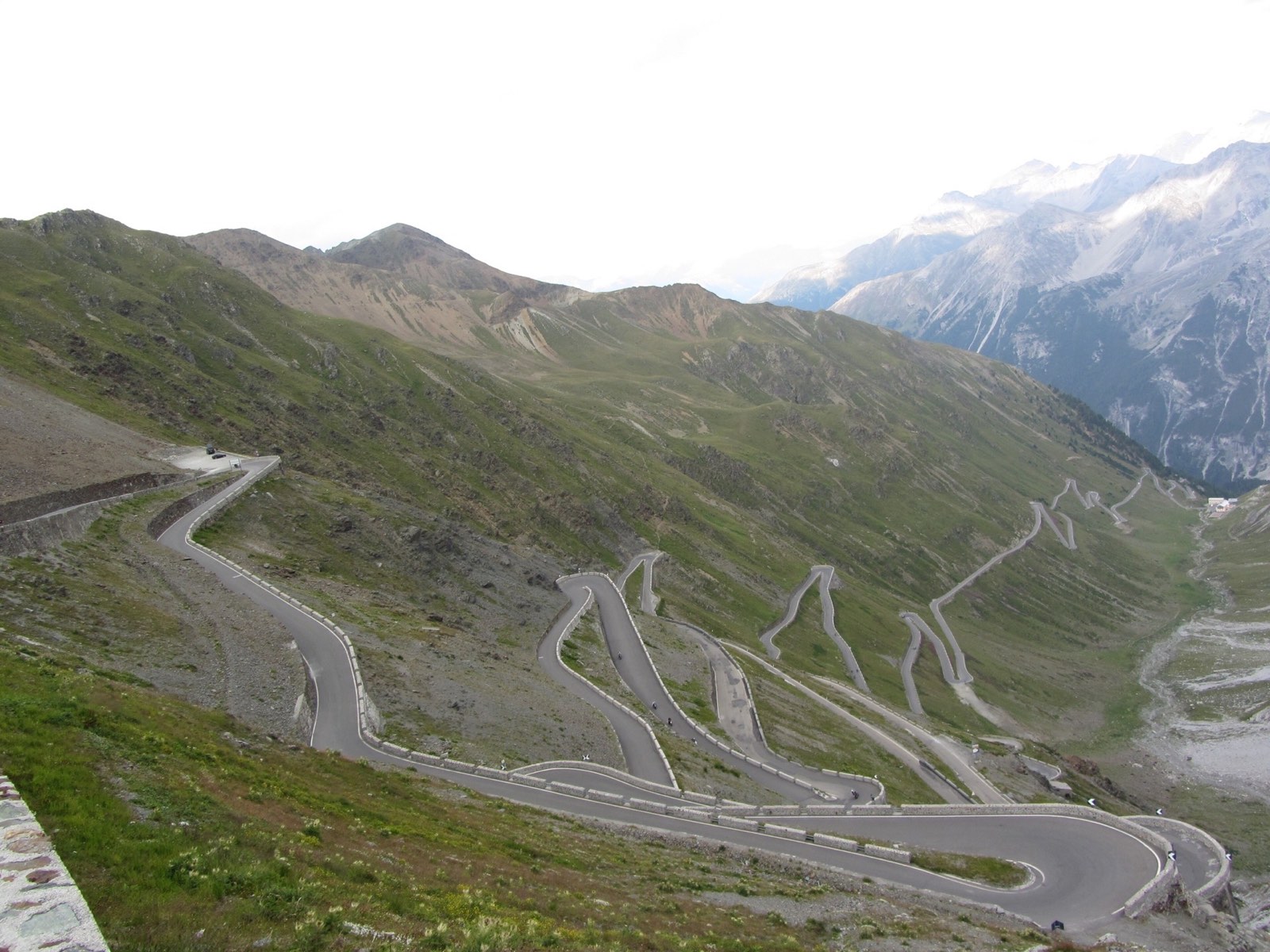
21.5 km ascent · 1,533 m gain · 7.1% average
Start: Bormio
Climb the 40 hairpins to 2,758 m and return the same way. This is the cleanest single-pass objective because turnaround decisions remain simple.
Open route source ↗Gavia–Mortirolo loop
About 100–120 km · 3,000 m-plus climbing
Start: Bormio
A major Alpine circuit combining two serious passes. Use supported logistics or a locally verified route and keep a one-pass fallback.
Open route source ↗Rentals, guides and activities
Buy local help where it removes real friction.
Rental, guiding and bookable activity options have different jobs. Exact inventory, bike specifications and terms require direct confirmation.
Stelvio eXperience
Compare a supported day or week when route timing, vehicle support and Alpine local knowledge reduce meaningful risk.
Official source checked · 20 September 2026
Supported by the source
- Daily group rides with guides
- Van support on long loops
- Stelvio, Gavia and Mortirolo programme
- Cyclist accommodation network
Confirm before booking
- Departure dates
- Group size and ability fit
- Exact inclusions
- Price and cancellation terms
Ski & Bike Bormio
A local rental comparison; require the exact model, size, cassette, chainring, brake setup and support terms before paying.
Check Ski & Bike Bormio ↗Bormio activities
Compare current guided activities and recovery-day options for the non-riding parts of the trip. Availability, inclusions and prices change.
Browse Bormio activities ↗Transfer choices
Solve the whole bike-and-luggage chain.
Vehicle names are not capacity guarantees. Share passenger count, case dimensions and assembled-bike requirements before paying.
Pre-booked bike-capable van
The cleanest answer for boxed bikes when passenger, luggage and case capacity are confirmed before the non-refundable booking.
Compare Milan transfers →Rental car or group vehicle
Useful for weather changes and a Livigno extension, but size the vehicle around cases and bikes rather than seat count.
Plan the ground journey →Trip-specific products
Pack for this destination, not an abstract checklist.
These products are untracked official links. Check compatibility and practise setup or repairs before departure.
Scicon Aerocomfort 3.0 Road
A soft-sided road-bike case to compare when reduced disassembly matters more than minimum external bulk. Confirm frame and airline compatibility.
Check the Aerocomfort ↗Skratch Super High-Carb Drink Mix
A higher-carbohydrate drink option for long days when carrying or tolerating solid food is difficult. Test it before travel.
Check Super High-Carb ↗Garmin Edge 850
A button-and-touchscreen cycling computer to compare for route-led travel. Download maps and routes before leaving reliable service.
Check the Edge 850 ↗Itinerary options
Three trip shapes that actually work.
Use the duration and base changes as constraints. Weather, operating seasons and current route conditions still need a final check.
Two-pass climbing break
Stelvio and Gavia are priorities; the schedule protects both.
- Arrival: build or collect bike and inspect brakes.
- Day 2: Cancano/Foscagno-area acclimation ride.
- Day 3: Stelvio out-and-back.
- Day 4: recovery, thermal spa or weather hold.
- Day 5: Gavia out-and-back if open; pack that evening.
First Alpine week
Three feature days separated by low-cost recovery.
- Days 1–2: setup and Cancano.
- Day 3: Stelvio.
- Day 4: recovery valley spin.
- Day 5: Gavia.
- Day 6: Mortirolo only if the group has recovered; otherwise another valley day.
- Day 7: pack and transfer.
Bormio plus Livigno
Six Bormio nights and three Livigno nights, not a daily pass-collecting contest.
- Bormio: Cancano, Stelvio, recovery and Gavia.
- Transfer to Livigno with bikes secured; no hard ride.
- Livigno: one altitude loop and one flexible gravel or recovery day.
- Keep the last morning for packing and the long airport connection.
Bormio shortlist
Two stays, one local riding specialist
Start with Bormio, compare a cycling-led hotel with a town-led alternative, and verify local rental or guiding separately.
Some links in this section may earn Pedal Elsewhere a commission at no extra cost to you. Recommendations remain editorially independent.
Hotel Funivia ↗
Our first cycling-hotel comparison for a stable Bormio base and a climb-led week.
View Hotel FuniviaHotel San Lorenzo ↗
Compare when a conventional central Bormio stay is preferable to a dedicated cycling-hotel proposition.
View Hotel San LorenzoStelvio eXperience ↗
Our local comparison for accompanied rides, bike rental or support. Confirm the precise service, equipment and dates.
View Stelvio eXperienceDolomites off-bike options ↗
Current Viator inventory for recovery or mixed-group days. Check that each activity is practical from your exact Alpine base.
Browse Dolomites experiencesProvider pages checked 15 September 2026. Confirm the exact current service, specification, price and terms before paying.
Detailed planningRead the full guide+
IS AN ALPINE TRIP RIGHT FOR YOU?
Choose the Italian Alps when sustained climbing, major mountain roads and the experience of riding high passes are central to the holiday. Compared with Mallorca or Girona, the trip is less forgiving of poor base selection, unsuitable gearing, inflexible scheduling and bad-weather assumptions.
The reward is exceptional mountain riding. The trade-off is that weather, seasonal road access, altitude, long descents and airport-to-mountain logistics matter more.
THE FIRST DECISION: WHICH ALPS?
“Italian Alps” is an umbrella, not a practical cycling base. Decide which riding cluster you want before booking a hotel or flight.
Bormio / Alta Valtellina — the clearest branch for riders deliberately targeting the Stelvio, Gavia, Mortirolo and the surrounding climbing environment. This is the launch collection’s principal Alpine base.
Dolomites — a separate high-mountain proposition built around dramatic pass networks. It deserves its own full collection when Pedal Elsewhere can support it with the same depth as Bormio rather than a thin list of famous roads.
Lake / pre-Alpine areas — potentially better when climbing needs to coexist with a broader Italian holiday or when every day should not be a high-altitude pass day.
Other Alpine areas can be excellent, but the rule remains the same: build a coherent riding cluster rather than a checklist spread across northern Italy.
BORMIO OR DOLOMITES?
For a first Alpine trip, this is a useful high-level decision. Bormio can concentrate several celebrated objectives around one specialist climbing base. A Dolomites trip is shaped by a different pass network and different gateway/base choices.
Use the existing Bormio vs Dolomites for a First Alpine Cycling Trip guide for the detailed comparison rather than reproducing it here.
WHAT ALPINE RIDING CHANGES
Distance becomes a poor shorthand for difficulty. Elevation gain, gradient, altitude, weather, exposure, road surface, traffic and descent length all matter. A long descent can create a completely different clothing and bike-control problem from the climb that preceded it.
Do not copy professional gearing because a famous race used the same road. Choose gearing for the rider, intended gradients and accumulated fatigue. The dedicated Italian Alps gearing guide should handle that decision in detail.
SEASON AND WEATHER ARE PART OF THE ITINERARY
High passes are seasonally constrained and conditions can change quickly. Never assume a road is open because it was open on the same date in another year or because valley weather looks good.
Build at least one lower-altitude or lower-risk alternative into the trip. On major ride days, make a current go/no-go decision using reliable forecasts, road information and local conditions. Summit ambition should not override deteriorating weather or unsafe roads.
HOW LONG SHOULD YOU GO?
Four riding days can work if the trip is tightly based, but a week is more resilient. Extra time allows recovery and, more importantly, lets the itinerary move the best mountain objective to the best weather window instead of forcing a pass on a predetermined day.
A week-long itinerary should include recovery, weather alternatives and a realistic arrival and departure rhythm.
BRING YOUR BIKE OR RENT?
Familiar fit and gearing can make bringing your own bike particularly attractive for a climbing trip. The downside is the airport-to-mountain transfer with a large case.
Rental can work if the supplier confirms size, gearing, brakes, pedals and collection/return logistics appropriate to the intended climbs. “Performance road bike” is not a sufficient specification.
Use the universal Bring vs Rent guide for the decision framework, the rental gearing guide for general mountain-rental questions, and the Italian Alps gearing guide for the destination-specific setup.
GETTING THERE
The correct gateway follows the chosen region. Milan-area airports may make sense for Bormio and some western/central itineraries; other gateways can make more sense for the Dolomites. Do not choose the cheapest flight first and force the cycling plan around it.
Model the door-to-door journey: connection risk, road/rail time, bike-case capacity, arrival hour and the return journey. A vehicle that seats the group may not carry the group plus multiple bike cases.
Use the existing Milan Airport to the Italian Alps With a Bike Case guide for the Bormio-oriented transfer implementation.
WHERE TO STAY
In the mountains, location can matter more than hotel category. Prioritise whether important rides can begin from the door, what returning to the property requires, bike and case storage, drying/laundry, breakfast timing, workshop access, food outside hotel hours and transfer/parking practicality.
For Bormio, compare bases by ride access, bike and case storage, drying and laundry, breakfast timing, workshop access and airport-transfer practicality.
THE ITALIAN ALPS COLLECTION
• Bormio vs Dolomites for a First Alpine Cycling Trip — choose the branch.
• Stelvio Cycling Trip Planning — plan a major objective without treating the pass as automatically rideable.
• What Gearing Do You Need for the Italian Alps? — destination-specific gearing decision.
• Milan Airport to the Italian Alps With a Bike Case — Bormio-oriented transfer planning.
• Alpine Cycling Packing List — altitude, layers and descent adaptation of the master Packing System.
• Road Bike Rental Gearing for Mountain Trips — universal rental-gearing framework.
• Take Your Own Bike or Rent at the Destination? — universal bike decision.
• Flying With a Bike — What to Check Before You Book — airline and itinerary planning.
• Post-Flight Bike Check — arrival inspection.
BEFORE YOU COMMIT
Select the riding region first; check typical seasonal access and plan to recheck live status; choose accommodation for route access rather than hotel category alone; model the airport-to-mountain transfer with actual case dimensions; choose gearing for the rider; build a lower-altitude weather alternative; leave arrival time for assembly and inspection; and identify qualified local mechanical support.